The modalities of working with AI are different than other methods of work. AI at its best abstracts away the gap between your thinking and your output and shapes the types of output you can create on your own now by giving you skill sets you didn't have access to. It can unlock your range and thus your creativity.
But creativity happens when you hit flow, and flow (usually) depends on absorption in a singular task in a way that time bends and focus deepens. And while you absolutely can flow with AI, there's a huge omnipresent barrier to it that comes in the form of latency, or lag.
You can evaluate models on a lot of different things — pure intelligence and horsepower, how many parameters they can run locally, how cheap they are etc. But speed, speed is an underappreciated one because it reduces friction between human and computer, intent and action.
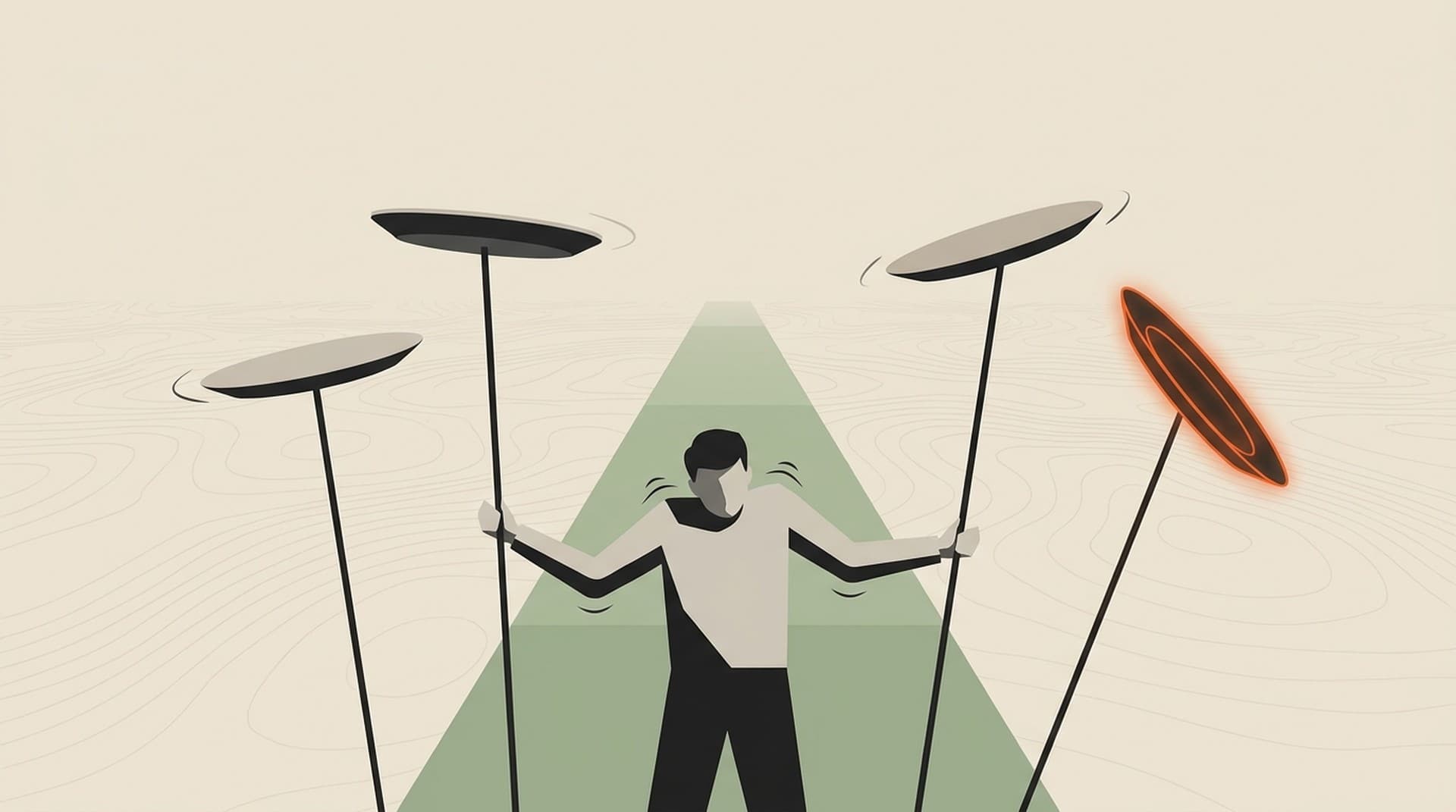
The Workaround: Multi-Terminal Multitasking
The workaround for latency that power AI users have adopted is working in multiple terminals — different agents on different things, bouncing between them. The ones who do this well are extensively using planning mode, PRDs, Ralph Wiggum loops and so on to scope work up front so the model goes off and runs on things. And hopefully you don't have to check in for a while and you come back, review output, provide feedback, and send it off on the next set of work.
Assuming you've optimized for not having to constantly say "yes" to the model's commands or tool calls (an entirely different friction point), that's about the most optimized power user workflow I've seen.
But the reality is that juicing your productivity in a high latency environment means that you must multitask and context switch. And as we know from decades of research, multi-tasking is sub-optimal both in the short term AND the long-term for productivity and mental functioning.
The Short-Term Tax: The Reacquaintance Loop
Now some of the multitasking productivity tax is abstracted away. The AI is not getting distracted while it waits for you to come back to it. But you the human still have to re-ground yourself in the context, re-familiarize yourself with what you're doing, give it more instructions before it goes off and does its thing while you switch gears again.
In the short term, you have to pay a reacquaintance tax every time you loop back to remember what you were working on, where you were, what you asked the AI to do, how you were planning to evaluate whether it did what you want and so forth. But then there are the implicit costs too. What are you not thinking about? What are you not doing? What moments of inspiration don't happen because your mind has been pivoted off of it? And furthermore, what are you missing without sustained focus? Are there insights that would have spawned from doing that thing and then something and then something else all on the same branch of work without distraction?
This is not multi-terminal AI work.
The Long-Term Cost: AI Fog and ADHD Wiring
Those are steep short term costs. The longer term costs, which relate to mental exhaustion, AI fog, and burnout, are potentially worse. I have seen that effect on myself. For months now I've cycled between weeks of caffeine-fueled 12 to 14 hour a day pushes with tremendous productivity. Day job, side hustles, creative projects all advancing every day. It's exhilarating in the moment. You feel like you can push things along. But then comes the crash. The fog, the burnout, the lack of focus.
And the costs also show up in adjacencies in how your brain works. I find myself constantly wanting to cycle through things faster. I'm reaching for my phone more often. Thinking just one more push with the AI. I'm only at 87% token use for the week. It almost feels like we are collectively building ADHD wiring into our multi-terminal productivity loops. Ask any power AI user and I guarantee there's visceral evidence of some of this: a graveyard of 80% done sessions and projects.
What's Next?
I don't know where this is going. It feels like we are at the very beginning stages of this as a real problem. I do know that latency is one of the proximate factors that generates it. If we compress latency maybe we get the same net-net number of new and different things we all push ourselves to build but we can approach it in ways that are more tried and true around how human brains work.
Because I don't want to be more like AI, I want it to help make me the best version of myself.